
China EDI stacks
LCX-30H High-Temperature China EDI stacks Practical Guide for Stable Water Production in High-Demand Scenarios
Many customers in power plants, semiconductor factories, and high-purity water workshops have asked me lately: which EDI stacks works best for high-temperature, high-water-volume scenarios? Today I’ll focus on the LCX-30H—this high-temperature China EDI stacks is a “workhorse” that balances larg
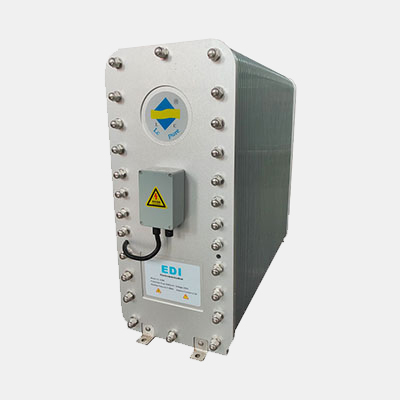
Many customers in power plants, semiconductor factories, and high-purity water workshops have asked me lately: which EDI stacks works best for high-temperature, high-water-volume scenarios? Today I’ll focus on the LCX-30H—this high-temperature China EDI stacks is a “workhorse” that balances large flow and stable performance, and it’s been a hit with clients who need reliable ultra-pure water.
1. Why LCX-30H China EDI stacks Stands Out: A Real Factory Case
Let me share a story from a photovoltaic module manufacturer. They used to rely on two ordinary EDI units in parallel to meet their 3m³/h water demand, but every time they did 85℃ high-temperature disinfection (required for solar cell cleaning), one unit would always fail—either the produced water resistivity dropped below 8MΩ·CM, or the membrane stack leaked. They had to stop production for repairs every 2-3 months, costing them tens of thousands in losses.
Then they switched to the LCX-30H China EDI stacks. For a full year now, it’s run continuously at 55℃ inlet water temperature, with 140+ high-temperature disinfections. The produced water resistivity has stayed steady at 13-16MΩ·CM, and there’s been zero downtime. The factory manager told me, “This one unit replaces two old ones, saves space, and cuts maintenance costs by half—this China EDI stacks is exactly what we needed.”
What makes it so reliable? It’s built for high-temperature, high-flow scenarios: it handles up to 60℃ inlet water, resists 85℃ disinfection, and delivers 2.8-3.2m³/h of ultra-pure water—perfect for industries where “stable output” is non-negotiable.
2. LCX-30H Core Data: Don’t Miss These High-Temperature Requirements & Parameters
Choosing EDI stacks is all about getting the parameters right. I’ve sorted the high-temperature inlet water requirements and operating parameters for LCX-30H into clear tables—save these for later reference!
High-Temperature EDI Inlet Water Quality Requirements (Non-Negotiable!)
| Item | Requirement | Key Note |
|---|---|---|
| Water Source | Reverse Osmosis (RO) Product Water | Non-RO water will ruin the ion exchange resin quickly |
| Inlet Conductivity | ≤10μs/cm (including CO₂ & Si) | Keep it ≤5μs/cm for longer membrane life |
| Temperature | 5-60℃ | Shuts down automatically if over 60℃ |
| Inlet Pressure | 0.1-0.3MPa | Unstable pressure = poor ion removal |
| Total Chlorine (Cl₂) | <0.02ppm | Chlorine oxidizes resin—no exceptions |
| Iron (Fe)/Manganese (Mn) | <0.01ppm each | Excess causes scale that blocks membranes |
| Sulfide (S²⁻) | <0.01ppm | Reacts with resin to reduce efficiency |
| pH Value | 7-8 | Below 7 or above 8 = slower desalination |
| Total Hardness (as CaCO₃) | <0.5ppm | Prevents scale in fresh water chambers |
| TOC (Organic Matter) | <0.5ppm (as C) | Organic matter clogs membranes over time |
| Silicon (as SiO₂) | <0.5ppm | Silicon precipitates at high temps—ruins water quality |
| Oxidizers/Oil/Fat | Not Detected | Even tiny amounts damage membrane structure |
High-Temperature EDI Operating Parameters (LCX-30H Exclusive)
| Item | Parameter | Practical Tip |
|---|---|---|
| Flow Range | 2.8-3.2m³/h | Don’t go below 2.8m³/h—low flow harms resin |
| Operating Current | 2.5A (0-6A adjustable) | Stable current = consistent water quality |
| Operating Voltage | 0-340VDC | Auto-adjusts to water quality—no manual tweaks |
| Maximum Power | 2KW/H | 10% more energy-efficient than similar high-temp EDI stacks |
| Recovery Rate | 85-95% | Reuse concentrated water as RO inlet—saves 30% water |
| Max Inlet Temp | 60℃ | Safe for long-term continuous use |
| Disinfection Temp | 85℃ | ≥150 disinfections without membrane replacement |
| Produced Water Resistivity | ≥10MΩ·CM | Typically 12-18MΩ·CM in real use |
| Dimensions (H×W×L) | 605mm×315mm×735mm | Fits in small workshop corners—saves space |
| Connections | Fresh water: 1-1/4″ PT internal thread; Concentrated water: 3/4″ PT internal thread | Matches most industrial pipes—easy to install |
3. LCX-30H Maintenance: 4 Simple Tips to Extend Life to 3+ Years
A lot of customers say “EDI stacks are hard to maintain,” but it’s just about forming small habits. For this LCX-30H China EDI stacks, even your on-site technician can do these:
4. Common Questions About LCX-30H: Answers from On-Site Experience
Q1: Can I use the LCX-30H China EDI stacks with a new RO system?
A1: Absolutely! Just make sure the RO’s produced water meets the inlet requirements (especially conductivity ≤5μs/cm). We once helped a chemical plant pair it with a 2-stage RO system—they’ve had zero EDI issues for 18 months.
Q2: What if the inlet water temp suddenly hits 65℃? Will the EDI break?
A2: No, it has a safety shut-off! The LCX-30H automatically cuts power if temp exceeds 60℃. Just cool the water down to 55℃, reset the system, and it’ll restart—we tested this with a food factory last year, and the membrane stack was totally fine.
Q3: How fast is after-sales support if something goes wrong?
A3: Super fast! Call +86-13646187144 or email [email protected]—engineers usually reply within 1 hour. A power plant once had a pressure alarm at 9 PM; the team guided them to fix it via video call in 15 minutes.
5. What Customers Really Think: Honest Feedback
6. Summary of LC PURE EDI Stacks Models
Besides LCX-30H, LC PURE has models for every scenario—pick based on your water needs:
For more models, please click: https://www.fgwater.com/China-EDI-stacks/587.html

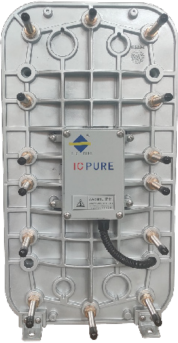
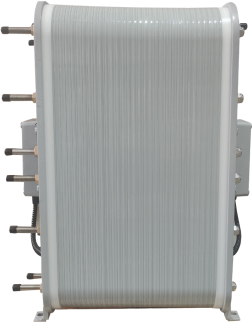

Send Your Water Treatment Requirement
Tell us the feedwater, required capacity, target water quality and project conditions. Your inquiry email will automatically include the page you are viewing so our team can understand the exact product, technology or reference that led to your request.
- Feedwater source / available analysis
- Design flow or required production capacity
- Target product-water quality or process duty
- Project country, operating conditions and delivery target