
Solution
Use of Ion Exchange Resin in Ultrapure Water Production for the Electronics Industry
DOW™ Ultrafiltration Modulesare advanced membrane-based systems engineered by Dow Water & Process Solutions to deliver reliable, high-purity water across industrial, municipal, and commercial applications. Built with hydrophilic modified polyvinylidene fluoride (H-PVDF) membrane filaments

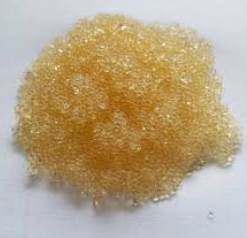
1. Application Industry
Ion exchange resin is widely used in the electronics and semiconductor manufacturing industry, mainly for the production of ultrapure water.
In the manufacturing of wafers, integrated circuits, LCD panels, LED chips, and photovoltaic cells, ultrapure water is used for wafer cleaning, equipment cleaning, chemical preparation, and process cooling. Because electronic components require extremely high processing precision, even trace amounts of ions, metal impurities, and organic contaminants in water can affect product quality. Therefore, production water in this industry must meet very strict purity requirements.
2. Problems to Be Solved
Ordinary tap water or raw water usually contains calcium ions, magnesium ions, sodium ions, chloride ions, sulfate ions, and metal ions such as iron and copper. If these impurities enter the electronics manufacturing process directly, they may cause the following problems:
Ion residue on wafer surfaces: Ionic impurities in water may remain on the wafer surface and affect subsequent photolithography, etching, and coating processes.
Reduced product yield: Trace impurities may cause circuit short circuits, leakage, or unstable performance.
Contamination of equipment and pipelines: Metal ions and other impurities may deposit inside equipment and affect production operation.
Unstable chemical reactions: Impure water can affect the purity and stability of electronic-grade chemicals.
Poor cleaning performance: Ordinary water cannot effectively remove contaminants from wafers and precision components.
Higher production costs: Product rejection rates increase, while equipment cleaning, maintenance, and downtime become more frequent.
Therefore, the core issue that the electronics industry needs to solve is:
How to remove dissolved ions and trace impurities from water in order to produce high-purity or ultrapure water that meets the requirements of electronic manufacturing processes.
3. Solution
Enterprises usually use a combined process of reverse osmosis (RO) + ion exchange resin + final polishing treatment to produce ultrapure water.
After pretreatment and reverse osmosis, most suspended solids, organic matter, salts, and microorganisms in the water are removed. The water then enters the ion exchange system, where cation exchange resin and anion exchange resin further remove residual ions.
The basic principle is as follows:
Cation exchange resin: Removes cations such as Ca²⁺, Mg²⁺, Na⁺, Fe³⁺, and Cu²⁺ from water and releases H⁺.
Anion exchange resin: Removes anions such as Cl⁻, SO₄²⁻, HCO₃⁻, and NO₃⁻ from water and releases OH⁻.
Combination of H⁺ and OH⁻: The released H⁺ and OH⁻ combine to form water molecules, further reducing the ion content in the water.
Mixed-bed ion exchange resin: In the final polishing stage, mixed-bed ion exchange resin is used to remove trace residual ions and improve the resistivity and purity of the produced water.
A typical process flow is:
Raw water → Multimedia filtration → Activated carbon filtration → Cartridge filtration → Reverse osmosis system → Cation exchanger → Anion exchanger → Mixed-bed ion exchanger → Ultrapure water point of use
In some production lines with higher water quality requirements, ultraviolet sterilization, terminal filtration, and ultrafiltration may also be added to further control organic matter, microorganisms, and particles.
4. Specific Application Scenario
Taking wafer cleaning as an example, after photolithography, etching, ion implantation, and other processes, chemical residues, particles, and metal contaminants may remain on the wafer surface. Semiconductor manufacturers use ultrapure water treated by ion exchange resin to rinse wafers multiple times, effectively reducing ionic impurities and metal contamination in the water.
After cleaning, the wafer surface is less likely to form new ionic residues, thereby reducing circuit defects caused by water quality problems and improving chip processing precision and product yield.
5. Application Results
After applying ion exchange resin to produce ultrapure water, electronics manufacturers can achieve the following results:
Reduced ion content in water, meeting the cleaning requirements of wafers and precision electronic components.
Lower metal ion contamination, reducing the risk of leakage, short circuits, and performance abnormalities in products.
Improved product yield, reducing product rejection caused by unqualified water quality.
Protection of production equipment, reducing ion deposition and contamination inside pipelines and equipment.
Improved chemical stability, preventing impurities in water from interfering with production processes.
More stable production continuity, reducing downtime and maintenance caused by water quality issues.
Lower overall production costs, improving economic benefits by reducing rework, rejection, and equipment maintenance.
6. Case Summary
In the electronics and semiconductor industry, ion exchange resin is mainly used to remove dissolved ions and metal impurities from water and produce high-purity and ultrapure water. This technology solves problems such as ionic contamination in ordinary water, residue on wafer surfaces, and reduced product yield. It is an important part of water treatment systems for electronics manufacturing.
Send Your Water Treatment Requirement
Tell us the feedwater, required capacity, target water quality and project conditions. Your inquiry email will automatically include the page you are viewing so our team can understand the exact product, technology or reference that led to your request.
- Feedwater source / available analysis
- Design flow or required production capacity
- Target product-water quality or process duty
- Project country, operating conditions and delivery target