
Solution
DuPont™ Ion Exchange Resin for Sugar Refining and Food Processing
DOW™ Ultrafiltration Modulesare advanced membrane-based systems engineered by Dow Water & Process Solutions to deliver reliable, high-purity water across industrial, municipal, and commercial applications. Built with hydrophilic modified polyvinylidene fluoride (H-PVDF) membrane filaments
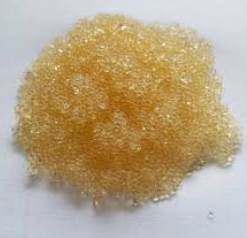
The sugar refining industry requires efficient purification technologies to produce high-quality white sugar, liquid sugar, invert sugar, and other refined sugar products.
During sugar extraction and processing, raw sugar liquor may contain color bodies, ash, mineral salts, organic acids, and other dissolved impurities. If these substances are not properly removed, they can affect the appearance, taste, purity, and stability of the final sugar product.
A properly designed system using DuPont™ ion exchange resin can help sugar manufacturers reduce color, remove dissolved ionic impurities, and improve the overall quality of refined sugar products.
What Problems Does the Sugar Industry Need to Solve?
Raw sugar and sugar liquor may contain various unwanted substances, including:
Natural color bodies
Organic acids
Ash and mineral salts
Calcium and magnesium ions
Sodium and potassium ions
Chloride and sulfate ions
Degradation products
Suspended particles
Dissolved organic impurities
These contaminants may create the following problems:
Darker sugar color
Reduced product purity
Unstable sugar quality
Unwanted taste or odor
Difficulty meeting customer specifications
Reduced crystallization efficiency
Increased chemical consumption
More frequent equipment cleaning
Higher production costs
Inconsistent quality between production batches
For sugar refineries and food manufacturers, the main challenge is:
How to remove color-forming substances and dissolved ionic impurities while maintaining stable product quality and efficient production.
How Ion Exchange Resin Works in Sugar Refining
Ion exchange resins can be used for several treatment stages in sugar refining, depending on the composition of the sugar liquor and the required final product quality.
1. Decolorization
Specialized macroporous or polymeric adsorption resins can capture color-forming organic molecules from sugar liquor. This helps improve the visual appearance of the final sugar product.
2. Demineralization
Cation and anion exchange resins can remove dissolved mineral ions and salts from sugar solutions.
Cation exchange resin removes positively charged ions such as Ca²⁺, Mg²⁺, Na⁺, and K⁺.
Anion exchange resin removes negatively charged ions such as Cl⁻, SO₄²⁻, and organic acid anions.
3. Product Purification
By reducing dissolved salts, organic acids, and color bodies, the resin system can help improve sugar purity and support more stable crystallization and evaporation processes.
A simplified process may be:
Raw Sugar Liquor → Clarification → Filtration → Decolorization Resin → Cation Exchange Resin → Anion Exchange Resin → Polishing Treatment → Refined Sugar Production
The actual process configuration should be selected according to raw material characteristics, flow rate, temperature, pH, color value, ash content, and food-contact requirements.
Benefits for Sugar Refineries
Improved Sugar Color
Decolorization resin helps reduce color-forming organic substances, allowing manufacturers to produce lighter and more uniform sugar.
Higher Product Purity
Ion exchange treatment removes dissolved salts and unwanted ionic compounds, helping improve the purity of refined sugar and liquid sugar products.
More Stable Production
A stable purification process can reduce fluctuations in sugar quality between production batches.
Reduced Chemical Consumption
With a well-designed resin system, manufacturers may reduce the need for excessive chemical clarification or repeated treatment. Actual savings depend on the raw material and process design.
Improved Crystallization Performance
Removing certain mineral salts and organic acids may support more consistent crystallization and evaporation performance.
Flexible Application
Ion exchange resin systems can be used for:
White sugar production
Liquid sugar purification
Invert sugar treatment
Glucose and syrup purification
Starch sugar processing
Food-grade water treatment
Beverage ingredient purification
Important Selection Factors
Before choosing a resin, buyers should evaluate:
Sugar liquor composition
Color value
Ash content
Total dissolved solids
pH and temperature
Flow rate
Resin contact time
Required decolorization level
Regeneration method
Chemical compatibility
Food-grade or food-contact requirements
Cleaning and sanitation procedures
For food and beverage applications, customers should confirm the applicable product documentation, regulatory requirements, extractables, leachables, and hygiene standards.
The appropriate DuPont™ resin grade should be confirmed using the latest technical data and the customer’s process conditions.
Suitable Applications
This solution is suitable for:
Sugar refineries
Liquid sugar producers
Syrup manufacturers
Beverage ingredient suppliers
Confectionery ingredient production
Glucose and fructose production
Starch processing plants
Food and beverage manufacturers
Frequently Asked Questions
Can ion exchange resin remove the color of sugar liquor?
Specialized adsorption or decolorization resins can help reduce color bodies in sugar liquor. The removal performance depends on the resin type, liquor composition, operating temperature, contact time, and regeneration method.
Is ion exchange resin suitable for food processing?
Certain resin grades may be designed for food-related applications. Buyers should confirm the applicable product approvals, food-contact requirements, and technical documentation before use.
Can the same resin remove both color and salts?
Different resins are often used for different functions. Decolorization resins are selected for organic color removal, while cation and anion exchange resins are used for demineralization.
What information is needed for a quotation?
Please provide the sugar liquor analysis, flow rate, temperature, pH, color value, ash content, required treatment capacity, and target product quality.
Send Your Water Treatment Requirement
Tell us the feedwater, required capacity, target water quality and project conditions. Your inquiry email will automatically include the page you are viewing so our team can understand the exact product, technology or reference that led to your request.
- Feedwater source / available analysis
- Design flow or required production capacity
- Target product-water quality or process duty
- Project country, operating conditions and delivery target