
Solution
DuPont™ Ion Exchange Resin for Mining and Metal Recovery
DOW™ Ultrafiltration Modulesare advanced membrane-based systems engineered by Dow Water & Process Solutions to deliver reliable, high-purity water across industrial, municipal, and commercial applications. Built with hydrophilic modified polyvinylidene fluoride (H-PVDF) membrane filaments
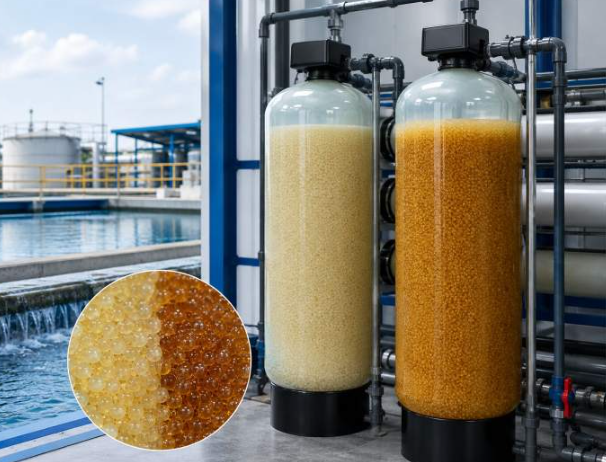
Mining and hydrometallurgical operations often process large volumes of leach solutions containing valuable metals as well as unwanted impurities.
Traditional separation methods may consume significant amounts of chemicals and may not provide sufficient selectivity when valuable metal concentrations are low. Ion exchange resin offers a practical solution for selectively capturing target metal ions from aqueous process streams.
Depending on the chemistry of the solution, DuPont™ ion exchange resin and specialized chelating resins can be used to recover or concentrate metals such as copper, nickel, cobalt, uranium, and other valuable elements.
What Problems Does the Mining Industry Need to Solve?
Leach solutions and mining wastewater may contain a mixture of valuable and non-valuable ions, including:
Copper
Nickel
Cobalt
Uranium
Zinc
Lithium
Iron
Calcium
Magnesium
Manganese
Sodium
Sulfate and chloride ions
Mining companies commonly face the following challenges:
Low concentration of valuable metals
Complex solution chemistry
High concentration of competing ions
Difficulty separating target metals from impurities
High chemical consumption
Large volumes of process water
Valuable metal loss in wastewater
Inconsistent feed solution quality
Increased sludge generation
High operating and treatment costs
The main problem is:
How to selectively recover valuable metal ions from complex process solutions and convert them into a more concentrated, reusable, or commercially valuable stream.
How Ion Exchange Resin Works in Metal Recovery
Ion exchange resin contains functional groups that can attract and hold specific ions from an aqueous solution.
When the metal-bearing solution passes through a resin column:
Target metal ions are transferred from the liquid phase to the resin.
Competing impurities remain in the solution or are captured to a lesser extent.
The resin is washed to remove entrained solution.
A suitable eluent or regenerant is used to strip the target metal from the resin.
The concentrated metal solution is sent to further recovery or refining.
A typical process flow is:
Ore Leaching or Process Solution → Solid-Liquid Separation → Feed Filtration → Ion Exchange Resin Columns → Washing → Elution → Concentrated Metal Solution → Metal Recovery
Depending on the application, the concentrated eluate may be sent to:
Solvent extraction
Electrowinning
Precipitation
Crystallization
Membrane concentration
Further refining
Reuse in the production process
Examples of Metal Recovery Applications
Copper Recovery
Ion exchange resin can be used to capture copper from acidic leach solutions or process wastewater. The recovered copper solution may be sent to solvent extraction and electrowinning.
Nickel and Cobalt Separation
Chelating resins can be considered for the selective recovery of nickel and cobalt from complex solutions. The final resin selection depends on pH, competing ions, oxidation state, and the required separation factor.
Uranium Recovery
Specialized ion exchange resins may be used to recover uranium from suitable leach liquors. The system must be designed in accordance with the solution chemistry, radiation safety requirements, and applicable regulations.
Zinc and Other Metal Recovery
Ion exchange technology may also be applied to zinc, manganese, lithium, and other metals where selective adsorption is technically and economically suitable.
Benefits for Mining and Hydrometallurgical Plants
Improved Metal Recovery
Ion exchange resin can help capture valuable metals that might otherwise remain in dilute process water or wastewater.
Selective Separation
Chelating and specialty resins may provide improved selectivity for specific metals compared with conventional treatment methods.
Reduced Metal Loss
Recovering target metals from waste streams can improve resource utilization and increase the potential economic value of the process.
Lower Sludge Generation
Compared with some precipitation-based methods, ion exchange may reduce the volume of metal-containing sludge. The actual result depends on the complete process design.
Process Water Reuse
After target metal removal, treated water may be suitable for reuse, subject to water quality requirements and plant conditions.
Flexible Modular Design
Resin columns can be installed in parallel or series and adjusted according to flow rate, metal concentration, resin loading capacity, and required recovery rate.
Important Selection Factors
Metal recovery applications require detailed technical evaluation. Key factors include:
Target metal concentration
Solution pH
Oxidation-reduction potential
Temperature
Total dissolved solids
Competing metal ions
Sulfate, chloride, nitrate, or carbonate concentration
Resin selectivity
Resin operating capacity
Flow rate
Empty bed contact time
Elution chemistry
Regeneration requirements
Resin fouling potential
Presence of suspended solids or organic matter
Laboratory testing, column testing, or pilot-scale trials are strongly recommended before full-scale installation.
The appropriate DuPont™ resin grade should be selected according to the latest technical information and the customer’s actual process solution.
Suitable Industries
This solution is suitable for:
Copper mining
Nickel and cobalt processing
Uranium processing
Zinc production
Lithium extraction
Rare-earth processing
Acid mine drainage treatment
Hydrometallurgical plants
Metal plating wastewater treatment
Industrial metal recovery systems
Frequently Asked Questions
Can ion exchange resin recover metals from mining wastewater?
Yes, ion exchange resin may be used to recover selected metal ions from suitable mining wastewater or process solutions. Performance depends on metal concentration, pH, competing ions, and resin selectivity.
Is ion exchange resin suitable for copper recovery?
Copper recovery is one of the potential applications of ion exchange technology. The appropriate resin and process configuration must be verified through solution analysis and testing.
Can one resin recover several different metals?
Some resins can capture multiple metal ions, but selective separation may require a resin with specific chelating functional groups or a multi-stage process.
Is pilot testing necessary?
For complex hydrometallurgical solutions, pilot testing is recommended. It helps determine adsorption capacity, breakthrough behavior, elution efficiency, resin fouling, and overall process economics.
What information is required for resin selection?
Please provide a complete solution analysis, including target metal concentration, pH, temperature, flow rate, competing ions, suspended solids, and the intended recovery method.
Send Your Water Treatment Requirement
Tell us the feedwater, required capacity, target water quality and project conditions. Your inquiry email will automatically include the page you are viewing so our team can understand the exact product, technology or reference that led to your request.
- Feedwater source / available analysis
- Design flow or required production capacity
- Target product-water quality or process duty
- Project country, operating conditions and delivery target