
Solution
DuPont™ Ultrafiltration Membranes for Seawater Desalination Pretreatment
DuPont™ UF Membranes for Seawater RO PretreatmentSeawater quality can change with tides, storms, seasonal conditions, and biological activity. Suspended solids, algae, colloids, and other contaminants can increase the fouling risk for reverse osmosis (RO) membranes.A DuPont™ ultrafiltration (UF) s
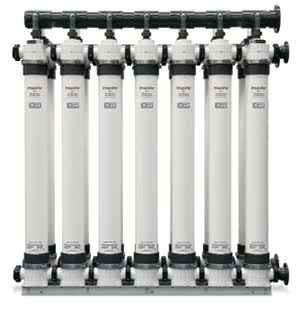
DuPont™ UF Membranes for Seawater RO Pretreatment
Seawater quality can change with tides, storms, seasonal conditions, and biological activity. Suspended solids, algae, colloids, and other contaminants can increase the fouling risk for reverse osmosis (RO) membranes.
A DuPont™ ultrafiltration (UF) stage can be used upstream of seawater RO to remove suspended particles and reduce feedwater turbidity. In an integrated system, UF acts as a physical pretreatment barrier; it does not desalinate the water or remove dissolved salts. RO remains responsible for salt rejection.
Typical Treatment Process
Seawater Intake → Screening → Optional Coagulation or DAF → DuPont™ UF → Cartridge Filtration → SWRO → Post-Treatment
The process configuration depends on seawater quality, seasonal variation, intake type, pretreatment requirements, and the RO plant’s design criteria.
How UF Helps Protect the RO Stage
A hollow-fiber UF module filters water through membrane pores, retaining many suspended and colloidal particles. Depending on the selected product and operating conditions, UF can help:
Reduce turbidity and particulate loading
Provide a more consistent RO feed
Reduce the need for conventional clarification in suitable designs
Support automated filtration, backwashing, and cleaning cycles
Adapt to variable feedwater conditions through system controls
DuPont’s published Jamnagar case study describes an inge UF installation used for seawater RO pretreatment at an oil refinery. It reports a UF capacity of 450,000 m³/day and a 95% recovery for that specific project; these are project-specific figures, not general guarantees for other sites.2
Key Design Considerations
Before selecting a UF module or estimating plant capacity, provide:
Seawater analysis and intake location
Seasonal turbidity and suspended-solids data
Algae or organic matter information, if available
Required permeate flow
Pretreatment chemicals and filtration sequence
RO feedwater targets
Site temperature range
Available footprint and utilities
Existing UF model, if this is a replacement project
Pilot testing may be appropriate where feedwater varies significantly or where the project has strict RO feedwater targets.
FAQ
Does UF remove salt from seawater?
No. UF removes suspended and colloidal material; it does not remove dissolved salts. Desalination is performed by RO or another desalination process.
Can UF replace all conventional seawater pretreatment?
Not in every project. Screening, coagulation, dissolved air flotation, or other pretreatment may still be required depending on intake water and system design.
Can you recommend a compatible replacement module?
We can review the existing model, dimensions, connections, operating data, and required capacity. Compatibility and availability should be confirmed before ordering.
Request a Quote
For a quotation on DuPont™ ultrafiltration membranes for seawater RO pretreatment, send us the seawater analysis, design flow, RO feedwater requirements, existing module details, destination country, and required delivery schedule.
Send Your Water Treatment Requirement
Tell us the feedwater, required capacity, target water quality and project conditions. Your inquiry email will automatically include the page you are viewing so our team can understand the exact product, technology or reference that led to your request.
- Feedwater source / available analysis
- Design flow or required production capacity
- Target product-water quality or process duty
- Project country, operating conditions and delivery target