
Solution
DuPont™ Ultrafiltration Membranes for Industrial Wastewater Reuse
DuPont™ UF Membranes for Industrial Wastewater ReuseIndustrial wastewater can contain suspended solids, colloids, oil, iron, organic matter, and other contaminants that vary with production schedules and operating conditions. If this water is reused without adequate treatment, it can cause fouling
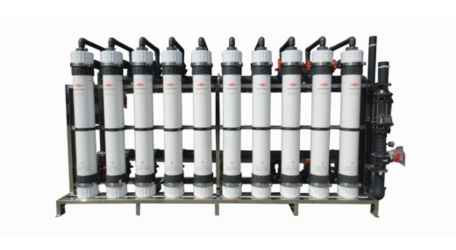
DuPont™ UF Membranes for Industrial Wastewater Reuse
Industrial wastewater can contain suspended solids, colloids, oil, iron, organic matter, and other contaminants that vary with production schedules and operating conditions. If this water is reused without adequate treatment, it can cause fouling in downstream RO membranes and affect the reliability of the reuse system.
DuPont™ PVDF ultrafiltration modules can be used as a filtration step in industrial wastewater treatment and reuse systems. UF reduces particulate and colloidal loading; depending on feedwater characteristics, it may be followed by RO, activated carbon, biological treatment, or other processes to meet the final reuse target.
Typical Treatment Process
Wastewater Collection → Equalization → Oil or Solids Removal, If Required → UF Pretreatment → DuPont™ UF → RO or Other Polishing → Reuse Tank
A specific project may require coagulation, clarification, biological treatment, activated carbon, or advanced oxidation before or after UF. The appropriate process depends on water analysis and the intended reuse application.
How UF Supports Water Reuse
A UF membrane separates many suspended particles and colloids from the water stream. When used ahead of RO, it can reduce particulate loading on the RO feed, provided the UF system is designed for the wastewater’s actual composition.
Potential benefits include:
Reduced suspended-solids and colloidal loading
A physical filtration barrier ahead of RO
Automated filtration and backwash operation
A modular configuration for capacity planning
Support for process-water recycling and wastewater reuse
DuPont’s published steel-industry case study describes UF as part of a complex industrial wastewater treatment process before RO. The documented feed included elevated iron, oil, turbidity, and COD; the case study reports an average UF filtrate turbidity of about 0.05 NTU and SDI below 3 for that installation. These are results from the specific project and should not be treated as guaranteed performance for other feedwaters.3
Important Feedwater and Design Factors
For preliminary module selection, provide:
Complete wastewater analysis
Flow rate and daily operating hours
Turbidity, TSS, oil, iron, and COD
pH and temperature range
Existing biological or chemical treatment
Required reuse quality
RO feedwater requirements, if applicable
Cleaning chemicals and operating limits
Existing system layout and model number for replacement inquiries
High oil, iron, solids, or organic loading may require additional pretreatment and pilot testing. UF does not remove dissolved salts and should not be presented as a standalone desalination process.
FAQ
Can UF treat industrial wastewater directly?
It depends on feedwater quality and the selected module’s operating limits. Oil, high solids, iron, and organic matter may require pretreatment to manage fouling.
Does UF produce water suitable for every reuse application?
No. UF primarily removes suspended and colloidal material. Dissolved salts and many dissolved contaminants may require RO or other treatment.
Can UF protect downstream RO membranes?
UF can reduce particulate and colloidal loading when properly designed and operated. Actual RO protection depends on feedwater, pretreatment, operation, and maintenance.
What should I provide for a replacement inquiry?
Send the module model and nameplate details, dimensions, connections, system flow, feedwater quality, and current operating conditions.
Request a Quote
For DuPont™ UF membranes for industrial wastewater reuse, send us the feedwater analysis, design flow, desired reuse quality, process diagram, and existing module details. We can help with product identification, specification review, export packing, and shipping coordination.
Send Your Water Treatment Requirement
Tell us the feedwater, required capacity, target water quality and project conditions. Your inquiry email will automatically include the page you are viewing so our team can understand the exact product, technology or reference that led to your request.
- Feedwater source / available analysis
- Design flow or required production capacity
- Target product-water quality or process duty
- Project country, operating conditions and delivery target