
International Brand Resins
DuPont™ AmberLite™ HPR650 H Ion Exchange Resin
In the field of water treatment, ion exchange resins are core materials that realize high-purity water purification. Among them, DuPont™ AmberLite™ HPR650 H Ion Exchange Resin stands out with its premium quality, high capacity, and uniform particle size, becoming a key choice for condensate polish
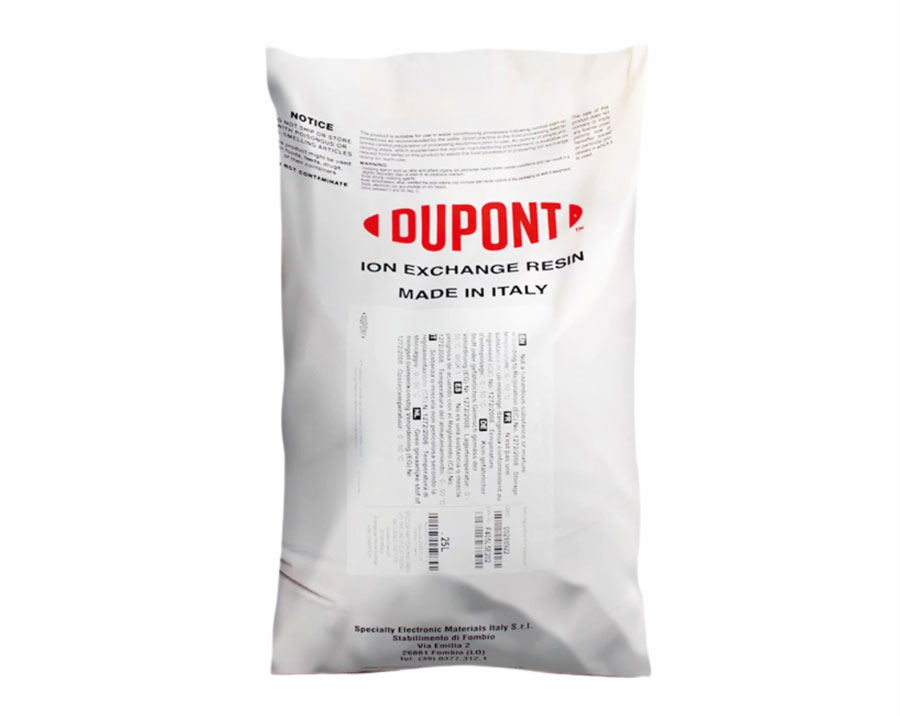
In the field of water treatment, ion exchange resins are core materials that realize high-purity water purification. Among them, DuPont™ AmberLite™ HPR650 H Ion Exchange Resin stands out with its premium quality, high capacity, and uniform particle size, becoming a key choice for condensate polishing in the power industry and mixed bed demineralization scenarios. This article will deeply explore the role of ion exchange resins in water treatment, and comprehensively introduce the product characteristics, application scenarios, technical parameters, and safe operation guidelines of DuPont™ AmberLite™ HPR650 H Ion Exchange Resin based on its official product data sheet (IER-AmberLite-HPR650-H-PDS-45-D01193-en.pdf).
The Core Role of Ion Exchange Resins in Water Treatment
Ion exchange resins are mainly divided into three categories: cation exchange resins, anion exchange resins, and mixed bed ion exchange resins, each undertaking unique water purification tasks to meet the diverse needs of industrial and domestic water treatment.
DuPont™ AmberLite™ HPR650 H Ion Exchange Resin, as a high-performance strong acid cation exchange resin, plays a vital role in the mixed bed water treatment system. It cooperates with matching anion exchange resins to achieve efficient and deep purification of water quality.
Product Overview: High-Purity Cation Resin for Critical Water Treatment Scenarios
DuPont™ AmberLite™ HPR650 H Ion Exchange Resin is a premium-quality, high-capacity strong acid cation exchange resin with a gel matrix and uniform particle size. It is specifically designed for nuclear condensate polishing mixed beds where the highest resin purity and water quality are non-negotiable.
Historically, this resin was sold under the name DOWEX MONOSPHERE™ 650C (H) Ion Exchange Resin, and its long-term application in the industry has established a good reputation for reliability and stability. Its core advantages are reflected in two key aspects:
Core Technical Parameters: Guaranteeing Stable and Efficient Performance
The excellent performance of DuPont™ AmberLite™ HPR650 H Ion Exchange Resin is supported by its superior physical, chemical, and stability parameters. The following table extracts key indicators from the official product data sheet for detailed explanation:
| Parameter Category | Specific Indicators | Significance |
|---|---|---|
| Physical Properties | - Copolymer: Styrene-divinylbenzene - Matrix: Gel - Type: Strong acid cation - Functional Group: Sulfonic acid - Physical Form: Dark amber, translucent, spherical beads - Particle Diameter: 650 ± 50 µm - Uniformity Coefficient: ≤ 1.10 - Particles < 300 µm: ≤ 0.5%; Particles > 850 µm: ≤ 5.0% | - Styrene-divinylbenzene copolymer ensures resin stability; gel matrix provides efficient ion exchange channels. - Uniform particle size (uniformity coefficient ≤ 1.10) ensures stable water flow, avoids uneven flow caused by particle size differences, and improves ion exchange efficiency. |
| Chemical Properties | - Ionic Form (Shipped): H⁺ - Total Exchange Capacity: ≥ 2.0 eq/L (H⁺ form) - Water Retention Capacity: 46.0 – 52.0% (H⁺ form) - Ionic Conversion: H⁺ ≥ 99% | - High total exchange capacity (≥ 2.0 eq/L) means strong ion adsorption capacity, which can handle more ion-containing water per unit volume of resin. - H⁺ conversion rate ≥ 99% ensures that the resin is in an active state when shipped, and can quickly start ion exchange work without additional activation steps. |
| Purity | - Metals (Dry Basis): Na ≤ 50 mg/kg; Fe ≤ 50 mg/kg; Cu ≤ 10 mg/kg; Al ≤ 50 mg/kg; Heavy Metals (as Pb) ≤ 10 mg/kg | Ultra-low impurity content avoids secondary pollution of water during the ion exchange process, which is crucial for scenarios with strict water quality requirements (such as nuclear power plant condensate polishing). |
| Stability | - Whole Uncracked Beads: ≥ 95% - Friability: Average ≥ 500 g/bead; > 200 g/bead ≥ 95% - Swelling (Na⁺ → H⁺): 7% - Particle Density: 1.22 g/mL; Shipping Weight: 785 g/L | - High proportion of whole uncracked beads and strong friability (average ≥ 500 g/bead) ensure that the resin is not easily broken during backwashing and regeneration, reducing resin loss and system maintenance costs. - Low swelling rate (only 7%) avoids equipment damage caused by excessive volume expansion of the resin, ensuring the stable operation of the water treatment system. |
These parameters collectively form the "performance guarantee" of DuPont™ AmberLite™ HPR650 H Ion Exchange Resin, making it capable of meeting the strict requirements of high-purity water treatment.
Recommended Resin Pairings: Maximizing Mixed Bed Purification Efficiency
The performance of mixed bed water treatment systems depends not only on the quality of a single resin but also on the synergy between cation and anion resins. For DuPont™ AmberLite™ HPR650 H Ion Exchange Resin, the official product data sheet provides clear pairing recommendations to adapt to different application scenarios:
1. Recommended Pairings
2. Additional Options
Application Scenarios: Focusing on High-Demand Water Treatment Tasks
DuPont™ AmberLite™ HPR650 H Ion Exchange Resin is designed for scenarios requiring ultra-pure water, and its application scope is clearly defined in the official product data sheet, mainly covering the following fields:
1. Condensate Polishing in the Power Industry
2. Industrial Demineralization
In industrial production processes that require high-purity water (such as chemical synthesis, electronic chip manufacturing, and pharmaceutical preparation), mixed bed demineralization systems using this resin can achieve the following effects:
Hydraulic Characteristics: Visualizing Backwash and Pressure Drop
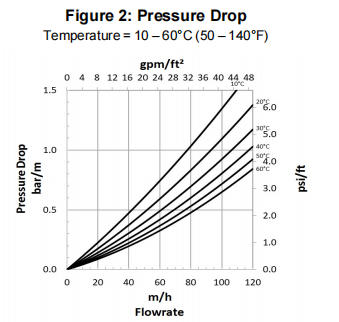
The hydraulic characteristics of ion exchange resins (including backwash expansion and pressure drop) are key factors affecting the design and operation of water treatment systems. The official product data sheet of DuPont™ AmberLite™ HPR650 H Ion Exchange Resin provides two core figures to guide practical applications:
1. Backwash Expansion
This figure shows the estimated bed expansion rate of the resin as a function of backwash flow rate (unit: m/h) and temperature (10 – 60°C / 50 – 140°F). Backwashing is a critical step in the resin regeneration process, which can remove impurities trapped between resin beads and restore the ion exchange capacity of the resin.

2. Pressure Drop
This figure reflects the estimated pressure drop of the resin bed as a function of service flow rate (unit: m/h or gpm/ft²) and temperature (10 – 60°C / 50 – 140°F). The pressure drop data is valid when clean water is used at the start of the service cycle.
Suggested Operating Conditions: Extending Resin Life and Ensuring Performance
To give full play to the performance of DuPont™ AmberLite™ HPR650 H Ion Exchange Resin and extend its service life, the official product data sheet specifies the following operating parameters:
1. Temperature Range
The applicable temperature range of the resin in the H⁺ form is 5 – 150°C (41 – 302°F), which is wider than that of many similar cation exchange resins. This advantage allows it to adapt to high-temperature water treatment scenarios, such as high-temperature condensate polishing in power plants. However, it should be noted that when operating at temperatures close to the upper limit (above 120°C), it is recommended to consult DuPont technical representatives to adjust the system parameters according to the actual water quality, to avoid excessive temperature affecting the resin's long-term stability.
2. pH Range
The resin has excellent stability in the pH range of 0 – 14, which means it can work normally in both strongly acidic and strongly alkaline water environments. This adaptability is particularly important for industrial wastewater treatment or mixed bed systems that require acid-base regeneration, as it avoids the need for additional pH adjustment steps and simplifies the system process.
3. Additional Guidance
For key parameters such as the recommended minimum bed depth of the resin, specific operating conditions (such as flow rate control), and regeneration conditions (such as acid concentration and dosage) in mixed beds or separate beds, please refer to DuPont’s special technical documents:
These documents provide detailed operational guidelines to help users optimize the water treatment system and achieve the best purification effect.
Safety Precautions: Avoiding Hazardous Reactions
When using DuPont™ AmberLite™ HPR650 H Ion Exchange Resin, safety must be the top priority. The official product data sheet emphasizes the following key warnings:
In addition, when replacing or regenerating the resin, operators should wear appropriate protective equipment (such as gloves, goggles, and overalls) to avoid direct contact with the resin or regeneration chemicals, and ensure good ventilation in the operation area to prevent the accumulation of harmful gases.
Purchase Information
If you are interested in DuPont™ AmberLite™ HPR650 H Ion Exchange Resin or need a complete set of water treatment solutions (including matching anion resins, system equipment, etc.), you can purchase and consult through FG Water Technologies. As a high-tech enterprise integrating water treatment equipment design, manufacturing, trade, and transportation, FG Water Technologies can provide professional technical support and customized solutions to meet your diverse water treatment needs.
In addition to DuPont ion exchange resins, FG Water Technologies also provides a full range of water treatment equipment, including containerized water purification systems, seawater reverse osmosis (SWRO) systems, brackish water reverse osmosis (BWRO) systems, ultrafiltration membrane
Send Your Water Treatment Requirement
Tell us the feedwater, required capacity, target water quality and project conditions. Your inquiry email will automatically include the page you are viewing so our team can understand the exact product, technology or reference that led to your request.
- Feedwater source / available analysis
- Design flow or required production capacity
- Target product-water quality or process duty
- Project country, operating conditions and delivery target