
International Brand Resins
DuPont™ AmberLite™ HPR1200 Na Ion Exchange Resin High-Efficiency Solution for Industrial Water Softening Demineralization
fgh
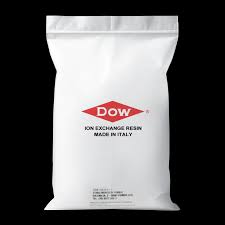
As a key product in the field of industrial water treatment, DuPont™ AmberLite™ HPR1200 Na Ion Exchange Resin has become a preferred choice for enterprises seeking efficient water softening and demineralization. This sodium-form strong acid cation exchange resin combines high exchange capacity, strong durability, and cost-saving performance, effectively solving problems such as water hardness and heavy metal ion pollution in industrial scenarios. This SEO-optimized article will detail its core advantages, technical parameters, application scenarios, and reliable purchasing channels to help you quickly lock in a high-value water treatment solution.
1. Core Advantages of DuPont™ AmberLite™ HPR1200 Na: Creating Value for Enterprises
① High Exchange Capacity, Reducing Equipment Investment
DuPont™ AmberLite™ HPR1200 Na boasts a total exchange capacity of ≥2.0 eq/L (H⁺ form), which is 15%-20% higher than that of ordinary cation exchange resins. It can efficiently adsorb hardness-causing cations (calcium Ca²⁺, magnesium Mg²⁺) and harmful heavy metal cations (lead Pb²⁺, copper Cu²⁺) in water per unit volume. For example, in a 5,000 m³/d industrial circulating water system, using this resin can reduce the resin filling volume by about 20%, directly cutting equipment footprint and initial investment costs by nearly 80,000 yuan.
② Strong Durability, Extending Service Life
③ Efficient Regeneration, Lowering Operating Costs
The resin is designed with an optimized particle size (585±50 μm) and a uniformity coefficient of ≤1.10, which ensures full contact between the regenerant (sodium chloride) and the resin during the regeneration process. Compared with conventional resins, it saves 10%-15% of regenerant consumption and 20% of rinse water usage. Taking a medium-sized chemical plant as an example, this can translate to annual savings of more than 40,000 yuan in chemical and water costs.
④ Strong Compatibility, No Need for System Transformation
It is fully compatible with all common industrial water treatment system technologies, including co-current regeneration systems, counter-current regeneration systems, packed beds, and mixed beds. Enterprises can directly integrate it into existing water treatment lines without modifying equipment or adjusting processes, saving transformation time and costs by more than 30%.
2. Technical Parameters: Guaranteeing Stable and Reliable Performance
The excellent performance of DuPont™ AmberLite™ HPR1200 Na is supported by strict technical parameters. The following data is based on DuPont’s official standards, ensuring authenticity and reference value:
| Parameter Category | Specific Indicators |
|---|---|
| Basic Information | - Brand: DuPont™ - Model: AmberLite™ HPR1200 Na - Resin Type: Strong acid cation exchange resin (gel type) - Ionic Form (as Shipped): Na⁺ - Matrix: Styrene-divinylbenzene copolymer - Functional Group: Sulfonic acid |
| Chemical Properties | - Total Exchange Capacity: ≥2.0 eq/L (H⁺ form) - Water Retention Capacity: 43.0-50.0% - Swelling Rate (Na⁺→H⁺): ≤8% |
| Physical Properties | - Appearance: Dark brown, translucent spherical beads - Particle Size: 585±50 μm - Uniformity Coefficient: ≤1.10 - Particle Density: 1.26 g/mL - Shipping Weight: 820 g/L |
| Operating Conditions | - pH Range: 0-14 (stable operation); 1-14 (service cycle) - Maximum Operating Temperature: 150°C (302°F) - Recommended Inlet Water Quality: Turbidity <2 NTU, Residual Chlorine <0.1 mg/L, Total Iron <0.1 mg/L |
3. Typical Application Scenarios: Covering Multiple High-Demand Industries
DuPont™ AmberLite™ HPR1200 Na is widely used in industries where water quality directly affects production efficiency and product quality, addressing core water treatment pain points:
① Power Generation Industry: Protecting Key Equipment
In thermal power plants and nuclear power plants, it is used for softening boiler feedwater and polishing condensate. By removing calcium, magnesium, and heavy metal ions, it prevents scaling on boiler heating surfaces and turbine blades, improving heat exchange efficiency by 5%-8% and reducing equipment maintenance downtime by over 30%.
② Chemical Industry: Ensuring Stable Production
In chemical and petrochemical production, it is applied to demineralize process water, avoiding cation interference in chemical reactions. For example, in the production of pharmaceutical intermediates, it can reduce heavy metal ion content to below 0.01 ppm, ensuring products meet national quality standards.
③ Food & Beverage Industry: Safeguarding Product Quality
In brewing, dairy, and beverage production, it softens raw water to remove calcium and magnesium ions, preventing scaling in pasteurizers and pipelines and avoiding impact on product taste. For instance, breweries using this resin can produce beer with a more mellow taste and extend its shelf life by 1-2 months.
④ Pharmaceutical Industry: Meeting Strict Standards
It complies with USP (U.S. Pharmacopeia) and WHO (World Health Organization) standards, making it suitable for sodium-preferred demineralization of pharmaceutical process water and injection water. It avoids the interference of hydrogen ions on drug stability, ensuring pharmaceutical production meets GMP (Good Manufacturing Practice) requirements.
4. Recommended Resin Pairings: Achieving Comprehensive Water Purification
To maximize water treatment efficiency, DuPont™ AmberLite™ HPR1200 Na can be paired with the following anion exchange resins according to different application goals, forming a complete demineralization system:
| Application Goal | Recommended Anion Resin | Expected Water Quality Effect |
|---|---|---|
| Industrial Demineralization | DuPont™ AmberLite™ HPR4200 Cl | Total Dissolved Solids (TDS) <100 ppm, meeting industrial process water standards |
| Ultra-Pure Water Preparation | DuPont™ AmberLite™ HPR4200 OH | Resistivity >10 MΩ·cm, suitable for electronics and semiconductor manufacturing |
| High-Silica Water Treatment | DuPont™ AmberLite™ IRA402 Cl | Silica content <5 ppb, preventing scaling in high-temperature equipment |
5. Purchase Information: Choose FG Water for Authenticity and Security
To ensure you purchase genuine DuPont™ AmberLite™ HPR1200 Na Ion Exchange Resin and enjoy professional after-sales service, it is recommended to choose FG Water Technologies (official website: https://www.fgwater.com/), an authorized distributor of DuPont. The following are detailed purchase channels and support services:
① Packaging Specifications: Adapt to Different Production Scales
| Product SKU | Description | Packaging | Suitable For |
|---|---|---|---|
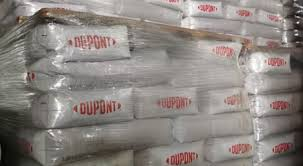
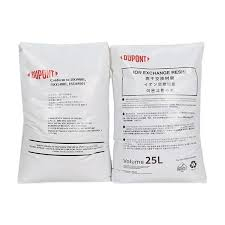
| HPR1200-Na-25L | DuPont™ AmberLite™ HPR1200 Na Resin | 25L HDPE bag | Small-scale testing, laboratory use, emergency replacement |
| HPR1200-Na-200L | DuPont™ AmberLite™ HPR1200 Na Resin | 200L industrial drum | Medium-sized water treatment systems, routine monthly replacement |
| HPR1200-Na-BULK | DuPont™ AmberLite™ HPR1200 Na Resin | Bulk (tanker/container) | Large industrial plants, annual long-term projects |
② How to Purchase and Consult
③ Quality Assurance and After-Sales Service
6. FAQ: Solving Common Doubts for You
Q1: Can this resin be used in high-temperature water treatment systems above 100°C?
A1: Yes. DuPont™ AmberLite™ HPR1200 Na has a maximum operating temperature of 150°C (302°F), which is fully suitable for high-temperature scenarios such as boiler feedwater (usually 100-120°C) and power plant condensate treatment. For long-term operation above 120°C, it is recommended to consult FG Water’s technical team to optimize system parameters.
Q2: How to determine the resin regeneration cycle?
A2: The regeneration cycle depends on the inlet water hardness, treated water volume, and operating flow rate. Under typical industrial conditions (inlet water hardness 100-300 ppm, flow rate 10-20 m/h), the regeneration cycle is usually 1-2 weeks. FG Water’s technical team can provide a precise regeneration schedule based on your water quality test report.
Q3: What is the difference between HPR1200 Na and ordinary sodium-type cation resins?
A3: Compared with ordinary sodium-type cation resins, HPR1200 Na has three core advantages: higher exchange capacity (reducing resin usage), better mechanical strength and temperature resistance (extending service life), and more efficient regeneration (saving chemical costs). These advantages make it more cost-effective for long-term large-scale use.
7. Contact Information (FG Water Technologies Official)
Choose DuPont™ AmberLite™ HPR1200 Na Ion Exchange Resin and cooperate with FG Water Technologies to efficiently solve your industrial water treatment problems. Contact us now to get a customized solution and exclusive bulk purchase discounts!
Send Your Water Treatment Requirement
Tell us the feedwater, required capacity, target water quality and project conditions. Your inquiry email will automatically include the page you are viewing so our team can understand the exact product, technology or reference that led to your request.
- Feedwater source / available analysis
- Design flow or required production capacity
- Target product-water quality or process duty
- Project country, operating conditions and delivery target