
Ion Exchange and Adsorption Resin
Bulk Ion Exchange Resin Supply for Industrial Softening and Demineralization
Bulk ion exchange resin supply for industrial softening and demineralisation: strong acid cation, strong base anion and weak base anion grades, verified datasheet data, packaging and lead time confirmed at quotation.
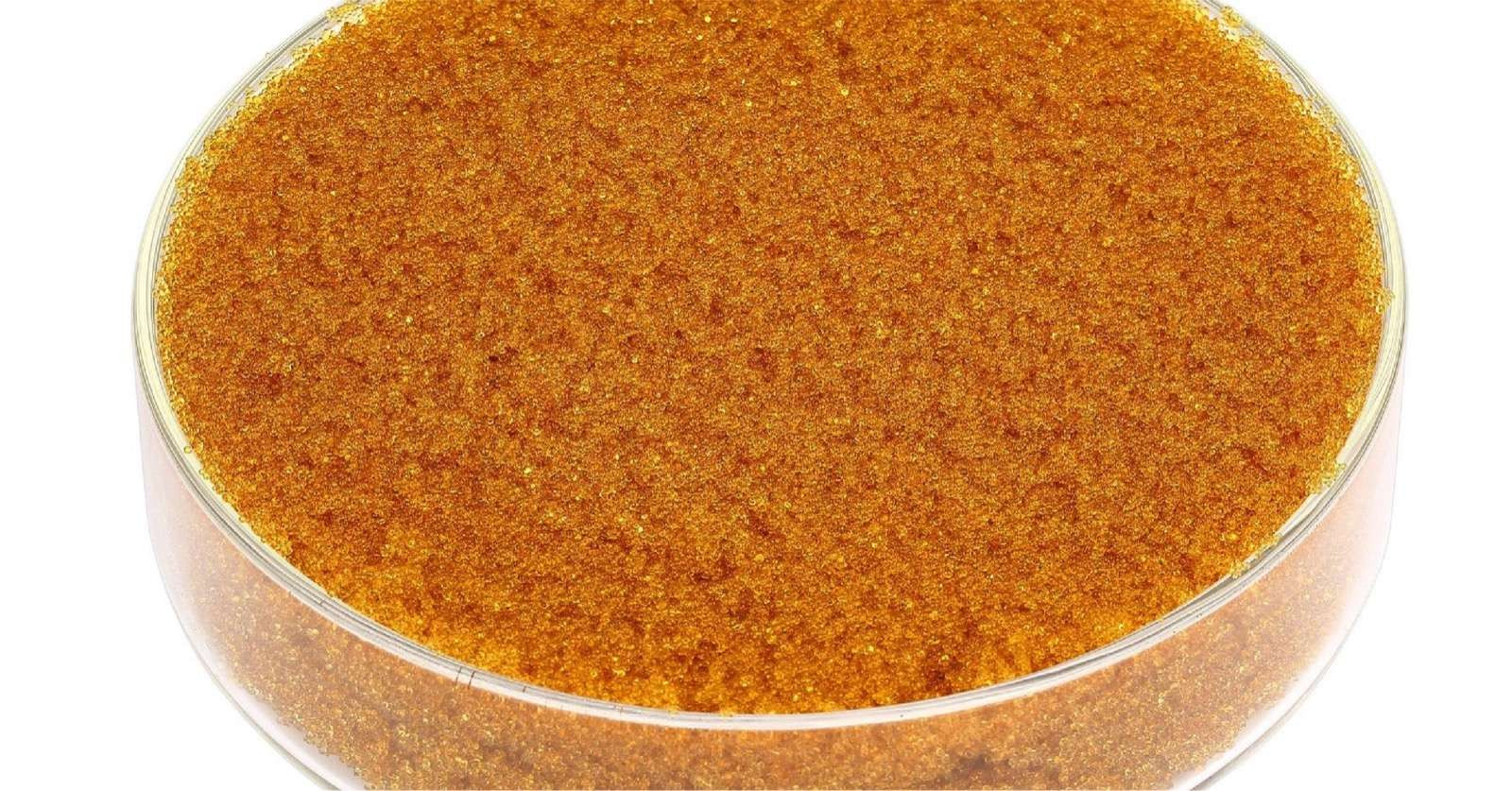
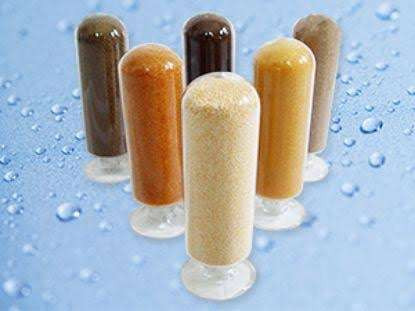
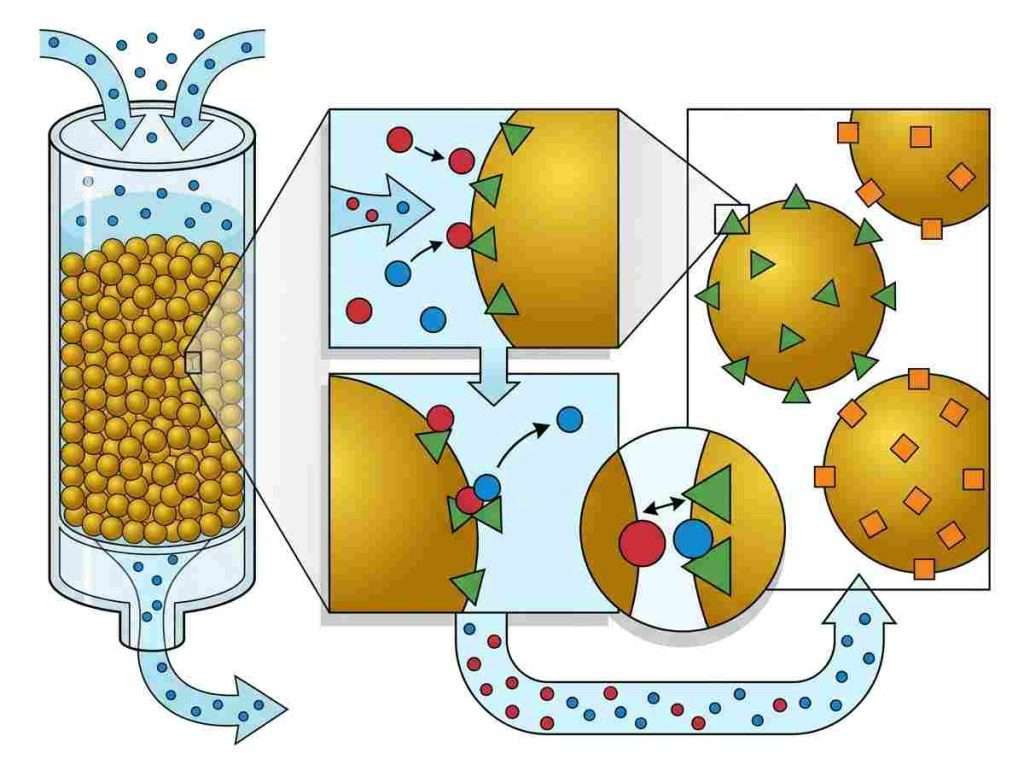
Bulk Ion Exchange Resin Supply for Industrial Softening and Demineralization
FG Water supplies bulk ion exchange resin for industrial water softening and demineralization: strong acid cation grades for softening and cation beds, strong base anion grades for two-bed and mixed-bed polishing, weak base anion grades for organic-loaded raw water, and inert media for bed separation. We work with distributors, EPC contractors and system integrators who buy by the litre, plan against a shutdown or commissioning date, and need a datasheet that answers both the engineer's and the buyer's questions.
This page brings the verified technical data for the grades most frequently specified in bulk softening and demineralization projects into one place, together with the selection boundaries that decide whether a grade is appropriate for your water. Every figure shown is a manufacturer data sheet limit, not a guaranteed operating value, and each is traceable to the document number listed at the end of the page.
Send your feedwater analysis, design flow and target water quality to [email protected] or use the enquiry form at the bottom of this page; you will receive grade recommendation, packaging options and lead time against current stock.
What Makes Bulk Resin Procurement Difficult
A datasheet that answers technical questions but not commercial ones
Engineers receive exchange capacity and particle size, then still cannot calculate how many litres of resin a vessel needs, how much the load will weigh, or how many bags will arrive. Our specification tables therefore carry total exchange capacity, moisture content, particle size, uniformity coefficient, particle density and shipping weight side by side, so bed volume, charge weight and packaging count can be derived from one source.
Replacement grades specified late in a shutdown window
When a named grade is no longer available, or a vessel is being re-packed on a short outage window, the decision is made on lead time and on whether the replacement can be proven against the same duty. Selection here is duty-first: temperature, capacity, particle size distribution and fouling resistance are matched to the service before a grade is proposed, and the proposal is confirmed against your feedwater data.
Packaging and handling assumptions that inflate landed cost
Resin is bought by the litre but shipped by weight and volume. Shipping weight differs by more than 300 g/L across the grades listed below, which changes pallet count, container fill and site handling. We confirm packaging format and load arrangement per grade at quotation so that the freight assumption is made before ordering, not after.
Substitution risk on gel versus macroporous and acrylic structures
Two grades with similar capacity can behave very differently in service. A macroporous anion resin tolerates organic fouling and osmotic shock better than a gel grade; an acrylic strong base anion resin releases fouled organics more easily on regeneration but has a much lower temperature limit. The structural type is therefore stated for every grade in the tables below.
Technical Highlights — Verified Datasheet Data
All values below are manufacturer product data sheet limits for the corresponding shipping ionic form. They describe the product as supplied; they are not guaranteed performance values in a specific installation.
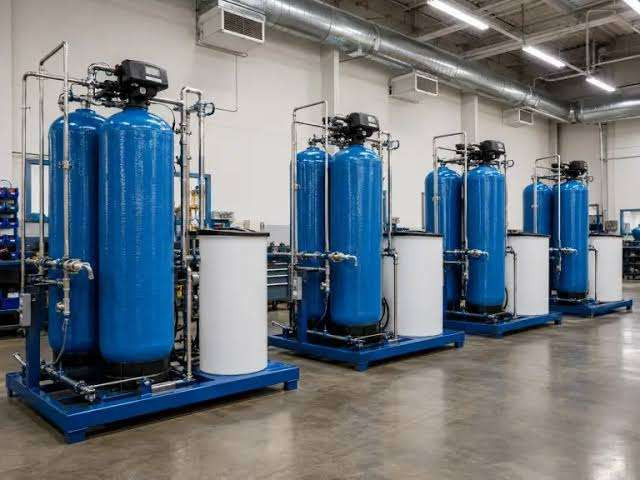
Strong acid cation resins — gel, sulfonic acid
Grade | Shipping form | Total capacity (eq/L) | Moisture (%) | Particle size (µm) | Uniformity coeff. | Shipping weight (g/L) | Max. temperature |
HPR1200 H | H⁺ | ≥ 1.8 | 50.0 – 56.0 | 600 ± 50 | ≤ 1.10 | 785 | 5 – 120 °C |
HPR1200 Na | Na⁺ | ≥ 2.0 | 43.0 – 50.0 | 585 ± 50 | ≤ 1.10 | 820 | 5 – 150 °C |
HPR1300 H | H⁺ | ≥ 2.0 | 46.0 – 52.0 | 650 ± 50 | ≤ 1.10 | 785 | 5 – 120 °C |
HPR650 H | H⁺ | ≥ 2.0 | 46.0 – 52.0 | 650 ± 50 | ≤ 1.10 | 785 | 5 – 150 °C |
HPR1000 Na | Na⁺ | ≥ 2.0 | 43.0 – 50.0 | 540 – 720 | ≤ 1.3 | 850 | 5 – 135 °C |
IRC120 H | H⁺ | ≥ 1.80 | 48.0 – 58.0 | fines ≤ 2.0% <300 µm; ≤ 4.0% >1180 µm | not stated | 800 | 5 – 120 °C |
IRC120 Na | Na⁺ | datasheet on request | datasheet on request | datasheet on request | datasheet on request | datasheet on request | datasheet on request |
Physical and chemical stability — cation grades
Grade | Matrix | Particle density (g/mL) | Operating pH | Physical form | Whole beads | Physical stability |
HPR1200 H | Gel, styrene-DVB, sulfonic acid | 1.20 | 1 – 14 | Dark brown, translucent spheres | ≥ 95% | Standard industrial duty |
HPR1200 Na | Gel, styrene-DVB, sulfonic acid | 1.29 | 1 – 14 | Dark brown, translucent spheres | ≥ 95% | Standard softening duty |
HPR1300 H | Gel, styrene-DVB, sulfonic acid | 1.22 | 1 – 14 | Dark brown, translucent spheres | ≥ 95% | Average attrition ≥ 350 g/bead |
HPR650 H | Gel, styrene-DVB, sulfonic acid | 1.22 | 1 – 14 | Dark brown, translucent spheres | ≥ 95% | Average attrition ≥ 500 g/bead |
HPR1000 Na | Gel, styrene-DVB, sulfonic acid | 1.26 – 1.30 | 1 – 14 | Dark brown, translucent spheres | ≥ 95% | Standard softening duty |
IRC120 H | Gel, styrene-DVB, sulfonic acid | 1.19 | 1 – 14 | Amber, translucent spheres | not stated | Standard industrial duty |
Complementary anion resins and inert media
Grade | Type / matrix | Form | Capacity (eq/L) | Particle size (µm) | Max. temperature | Typical bulk duty |
HPR4200 Cl | Strong base anion, Type I, gel | Cl⁻ | ≥ 1.30 | 650 ± 50 | 60 °C (OH) / 100 °C (Cl) | Single- and layered-bed anion duty |
HPR4800 Cl | Strong base anion, Type I, gel | Cl⁻ | ≥ 1.3 | 575 ± 50 | 60 °C (OH) / 100 °C (Cl) | Demineralization, high-silica water |
HPR4800 OH | Strong base anion, Type I, gel | OH⁻ | ≥ 1.0 | 610 ± 50 | 60 °C (OH) / 100 °C (Cl) | Mixed-bed and final polishing |
IRA402 Cl | Strong base anion, Type I, gel | Cl⁻ | ≥ 1.20 | 600 – 750 | 60 °C (OH) / 100 °C (Cl) | Low silica leakage applications |
IRA458 Cl | Strong base anion, acrylic matrix | Cl⁻ | ≥ 1.25 | 600 – 900 | 35 °C (OH) / 80 °C (Cl) | Organic-fouled water, easy regeneration |
HPR9500 | Weak base anion, macroporous | Free base | ≥ 1.3 | 550 ± 50 | 5 – 60 °C | Strong-acidity and organic removal |
HPR9600 | Weak base anion, macroporous, uniform | Free base | ≥ 1.3 | 550 ± 50 | 5 – 60 °C | Layered bed, low-temperature duty |
HPR9700 | Weak base anion, macroporous | Free base | ≥ 1.3 | 630 – 900 | 5 – 60 °C | High organic-fouling raw water |
IRA96 | Weak base anion, macroporous | Free base | ≥ 1.3 | 550 – 750 | 5 – 60 °C | Partial demineralisation |
14i | Inert polymer (no functional group) | — | — | 1.2 – 1.5 mm | 5 – 100 °C | Floating top layer, bed separator |
62i | Inert polymer (no functional group) | — | — | 2.5 – 4.0 mm | 5 – 110 °C | Upflow fine-bed inert filler |
Particle density for the weak base anion grades listed above is 1.05 g/mL; whole-bead content is ≥ 95% for all grades in this table except HPR4200 Cl and IRA402 Cl, where the data sheet states ≥ 90%. IRC120 Na parameters are available on request and are deliberately left blank above rather than quoted from a non-original source.
Application Range
Softening and demineralisation answer different questions: softening exchanges hardness cations for sodium to protect downstream heat-transfer surfaces from scale, while demineralisation removes the dissolved ionic load to a conductivity target. The grade families, operating aims and system designs differ accordingly, so the applications below are grouped by duty rather than treated as a single service.
Industrial water softening
For hardness removal on boiler makeup, cooling makeup, process water and pretreatment trains, sodium-form strong acid cation resins are the standard choice. HPR1200 Na and HPR1000 Na are offered for softening duty, with HPR1000 Na carrying the highest shipping weight in this group at 850 g/L, which rewards dense vessel loading. IRC120 Na is also supplied for softening and is listed on our resin pages; its parameter sheet is provided with the quotation. Hydrogen-form grades such as IRC120 H are used where softening and acidity duty are combined.
Demineralization — cation beds and mixed beds
HPR1200 H is a general-duty hydrogen-form gel cation resin for demineralization service, usable in a cation bed ahead of an anion bed or as the cation component of a mixed bed. HPR1300 H and HPR650 H offer the same gel sulfonic structure at a nominally higher total capacity of at least 2.0 eq/L, with HPR650 H rated to 150 °C and showing the highest attrition resistance in this group. Uniformity coefficients of ≤ 1.10 on HPR1200 H, HPR1200 Na, HPR1300 H and HPR650 H support predictable backwash classification and lower headloss than wide-distribution grades.
Anion removal, silica control and final polishing
HPR4200 Cl and HPR4800 Cl cover conventional strong base anion duty in two-bed demineralization; HPR4800 OH is supplied in hydroxide form for polishing service. IRA402 Cl is the grade to evaluate where silica leakage in a high-silica feed is the controlling specification. IRA458 Cl uses an acrylic matrix, which releases adsorbed organics more readily on regeneration and resists osmotic and mechanical stress better than styrenic Type I gels, but it must not be run above 35 °C in the hydroxide form — a boundary that rules it out of many hot demineralization duties.
Organic-fouled and high-mineral-acidity raw water
Macroporous weak base anion resins (HPR9500, HPR9600, HPR9700, IRA96) are used upstream of a strong base anion resin to remove strong mineral acidity and natural organic matter, which protects the downstream bed and reduces organic scavenging chemical consumption. They operate between 5 and 60 °C and are effective at low pH, where strong base resins are continuously regenerated. HPR9600 is the uniform-particle option in this group and retains working capacity at low temperature.
Bed separation and inert layers
14i and 62i are non-functional inert polymer media. 14i is a floating grade used as a top layer in fine-bed and concurrent regeneration schemes; 62i is used as inert filler above the active bed in upflow fine-bed systems. Both have a particle density of 0.95 g/mL, which is what keeps them on top of the wet resin.
Product and System Configuration
The configurations below are the duties these grades are most often specified for. Grade selection must always be confirmed against a feedwater analysis; the listed limits are the manufacturer's data sheet values.
Configuration | Duty | Grades commonly specified | Controlling limits to check |
Softening trains (parallel or sequential) | Calcium and magnesium removal, boiler and cooling makeup | HPR1200 Na, HPR1000 Na, IRC120 Na | Feed temperature, hardness load, regenerant salt quality, free chlorine |
Strong acid cation bed (H-form) + strong base anion bed | Two-bed demineralization for process and boiler feed water | HPR1200 H or HPR1300 H with HPR4200 Cl or HPR4800 Cl | Silica and CO₂ in feed, anion bed temperature, regeneration level |
Mixed bed polishing after RO | Final polishing to low conductivity | HPR1200 H or HPR650 H with HPR4800 OH | Separation of the two resins on backwash, temperature, organic load |
Layered or dual-layer bed (weak base + strong base) | High organic or high mineral acidity feeds | HPR9600 or HPR9500 with HPR4200 Cl or HPR4800 OH | Layer order and volumes, regeneration routings, temperature ≤ 60 °C for the WBA layer |
Organic scavenging / protective bed | Removal of natural organic matter ahead of polishing | IRA458 Cl, HPR9500, HPR9700 | Temperature limit of the acrylic grade, regeneration frequency |
Inert top layer | Bed protection and even flow distribution | 14i, 62i | Backwash rate, bed level control |
Supply Programme for Distributors and System Integrators
We supply these grades to distributors, OEM skid builders, EPC contractors and plant maintenance buyers who need a repeatable supply rather than a one-off purchase. A typical supply package covers:
• Grade matching against your duty description or an existing specification, with the data sheet reference for every figure quoted back to you.
• Volume planning from single-drum trial quantities to multi-pallet bulk orders for a full vessel charge or a shutdown replacement; the exact minimum order and order multiples are confirmed per grade at quotation.
• Packaging options confirmed per grade and per destination, including bag and drum arrangements and pallet configuration, so that container fill and site handling can be planned before shipment.
• Documentation support: the product data sheets behind every figure on this page, plus the batch documents your quality process requires — tell us which documents you need in the enquiry and we confirm availability for the specific lot.
• Export handling from Wuxi, China, including Incoterms, packing lists and shipment documentation for your destination.
Packaging volumes, minimum order quantities, lead times and stock positions are confirmed against current supply for each enquiry. This page does not state them as fixed commitments.
Selection Guidance — Matching the Grade to the Duty
If your priority is… | Consider | Why (data sheet basis) |
Highest continuous temperature | HPR650 H, HPR1200 Na | Both rated to 150 °C, the highest in this group |
Highest shipping weight / dense loading | HPR1000 Na | 850 g/L shipping weight |
High capacity with a narrow particle size distribution | HPR1200 H, HPR1300 H | Uniformity coefficient ≤ 1.10; HPR1300 H ≥ 2.0 eq/L |
Best attrition resistance for high-duty cycling | HPR650 H | Average attrition ≥ 500 g/bead; HPR1300 H ≥ 350 g/bead |
Lowest silica leakage on a high-silica feed | IRA402 Cl | Gel Type I strong base anion grade positioned for low silica leakage |
Resistance to organic fouling and easier regeneration | IRA458 Cl (acrylic), or a macroporous weak base anion as a protective bed | Acrylic matrix releases organics more readily; not above 35 °C in OH form |
Working capacity at low feed temperature | HPR9600 | Uniform macroporous weak base anion grade for layered-bed duty |
Inert floating layer above the active bed | 14i (fine bed), 62i (upflow fine bed) | Particle density 0.95 g/mL, below that of wet resin |
Frequently Asked Questions
Which ion exchange resin is used for industrial water softening in bulk?
Sodium-form strong acid cation resin. We supply HPR1200 Na and HPR1000 Na for softening duty, and IRC120 Na for the same service; HPR1000 Na has the highest shipping weight of the group at 850 g/L. Selection between them is made on feed temperature, hardness load and regenerant practice.
What is the difference between IRC120 Na and HPR1200 Na?
Both are gel strong acid cation resins in the sodium form used for softening. HPR1200 Na is supplied with a published data sheet showing at least 2.0 eq/L total capacity, 585 ± 50 µm particle size and a uniformity coefficient of ≤ 1.10. For IRC120 Na we confirm the parameter sheet with your quotation rather than quoting figures from a third-party source.
Can HPR1200 H be used as the cation component of a mixed bed?
Yes. HPR1200 H is a gel sulfonic acid cation resin in the hydrogen form, used both in cation beds for demineralization and as the cation component of mixed-bed polishing. Pair it with a strong base anion resin of matching particle size and density so that the two resins separate cleanly on backwash.
What is the maximum operating temperature of these grades?
HPR650 H and HPR1200 Na are rated to 150 °C; HPR1000 Na to 135 °C; HPR1200 H, HPR1300 H and IRC120 H to 120 °C. Strong base anion grades are limited to 60 °C in the hydroxide form and 100 °C in the chloride form, and the acrylic IRA458 Cl is limited to 35 °C in the hydroxide form.
How is bulk ion exchange resin packaged and shipped?
Resin is supplied in industry-standard bagged and drummed packaging, palletised for export from China. The packaging format and litre count per unit are confirmed per grade and per destination at quotation, together with the pallet configuration, so that your freight calculation is based on the actual shipment.
What is the minimum order quantity?
Minimum order quantity depends on the grade and the current production or stock position, so we quote it rather than publish a single figure. Trial quantities and full-vessel bulk orders are both handled; include your required volume and delivery window in the enquiry.
Which resin is best for high-silica water?
Evaluate IRA402 Cl, a gel Type I strong base anion grade positioned for low silica leakage, together with HPR4800 Cl for conventional high-silica demineralization duty. Silica leakage is also controlled by regeneration level, bed temperature and the loading order, so confirm the selection against your analysis.
How do I choose between a gel and a macroporous anion resin?
Choose gel grades for high capacity and clean waters, and macroporous grades when the feed carries natural organic matter, or when the bed sees osmotic and oxidative stress. Macroporous weak base anion resins (HPR9500, HPR9600, HPR9700, IRA96) are used upstream of a strong base bed for that reason.
Can you supply an equivalent to a named grade already in my vessel?
Send the existing specification, the data sheet you hold, or the vessel nameplate and service conditions. We will confirm which of the grades we supply matches the duty, and state the data sheet reference for every figure we quote, so that your engineering review can accept or reject the substitution on its own basis.
What technical documents come with a bulk order?
The product data sheets for the grades quoted are provided with the offer. If your quality system requires batch-level certificates, safety data sheets or lot traceability documents, list them in the enquiry and we confirm what is available for the specific lot before you order.
How do I convert total exchange capacity to practical units?
Total capacity in eq/L multiplies by 2.19 to give grains per litre, and by 624 to give grains per cubic foot. A resin at 2.0 eq/L therefore holds about 4,380 grains/ft³ at 100% conversion; practical operating capacity is lower and depends on regenerant level, flow, hardness and sodium ratio.
What happens if feed temperature exceeds the data sheet limit?
Continuous operation above the rated temperature accelerates loss of functional groups, which shows first as falling exchange capacity and shorter run length rather than immediate failure. Where temperature excursions are possible, size the bed with a margin or select the higher-rated grade; HPR650 H and HPR1200 Na are the 150 °C options in this group.
Request a Quotation
Send the following and you will receive a grade recommendation with data sheet references, packaging options, minimum order quantity and lead time against current stock:
Information | Why we need it |
Feedwater analysis or a description of the source water | Determines grade family, iron and organic fouling risk, silica duty |
Design flow, vessel dimensions and current bed volume | Converts capacity into litres of resin and bags per vessel |
Target product water quality or process duty | Sets the acceptance basis for the recommendation |
Grade and quantity you are buying, or the grade you are replacing | Allows a like-for-like or duty-based proposal |
Destination port or delivery address, and target date | Determines packaging, freight and realistic lead time |
Documents required by your quality process | Confirms availability for the specific lot before order |
Contact: [email protected] · Phone / WhatsApp: +86-13646187144 · Wuxi Fenigal Science and Technology Co., Ltd., Building 9, Industrial Design Park, Dicui Rd. 100, Binhu, Wuxi, Jiangsu, China. Use the enquiry form on this page and the page context is attached to your message automatically.
Explore the full range on our Ion Exchange and Adsorption Resin page, or send your requirement now for a technical and commercial response.
Technical References
Technical values on this page are taken from the following manufacturer product data sheets held on file: 45-D01221-en (HPR1200 H), 45-D01222-en (HPR1200 Na), 45-D01223-en (HPR1300 H), 45-D01193-en (HPR650 H), 45-D00744-en (HPR1000 Na), 45-D01245-en (IRC120 H), 45-D01229-en (HPR4200 Cl), 45-D01235-en (HPR4800 Cl), 45-D01234-en (HPR4800 OH), 45-D01251-en (IRA402 Cl), 45-D01253-en (IRA458 Cl), 45-D01242-en (HPR9500), 45-D01243-en (HPR9600), 45-D01244-en (HPR9700), 45-D01250-en (IRA96), 45-D00978-en (14i) and 45-D00980-en (62i). Data sheets are available on request.
Trademark note: AmberLite™, AmberTec™ and DOWEX™ are trademarks of their respective owners. Reference to a grade name identifies the product supplied and does not state an authorised distribution, manufacturing or agency relationship.
All technical values are manufacturer data sheet limits for the shipping ionic form and are provided for engineering evaluation. They are not a guarantee of performance in a specific installation; confirm grade selection against your feedwater analysis and operating conditions.
Send Your Water Treatment Requirement
Tell us the feedwater, required capacity, target water quality and project conditions. Your inquiry email will automatically include the page you are viewing so our team can understand the exact product, technology or reference that led to your request.
- Feedwater source / available analysis
- Design flow or required production capacity
- Target product-water quality or process duty
- Project country, operating conditions and delivery target