
Ion Exchange and Adsorption Resin
HPR550 Cl Ion Exchange Resin Supplier for Mixed Bed Polishing
Supply of DuPont AmberLite HPR550 Cl, a uniform particle size gel strong base anion resin (1.35 eq/L, 550 +/- 50 micron) for condensate polishing and mixed bed demineralisation. (177 characters)Looking for an HPR550 Cl ion exchange resin supplier? Verified PDS data, HPR650 H pairing rules, Cl versus OH form selection and quotation checklist for power plant polishing beds. (180 characters)Recommendation: Option 1. It states the grade, the form, two hard numbers and the application, which is what both engineers and answer engines extract.
HPR550 Cl Ion Exchange Resin Supplier for Mixed Bed Polishing
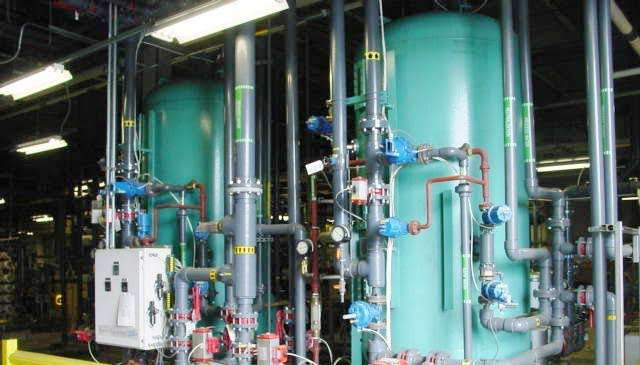
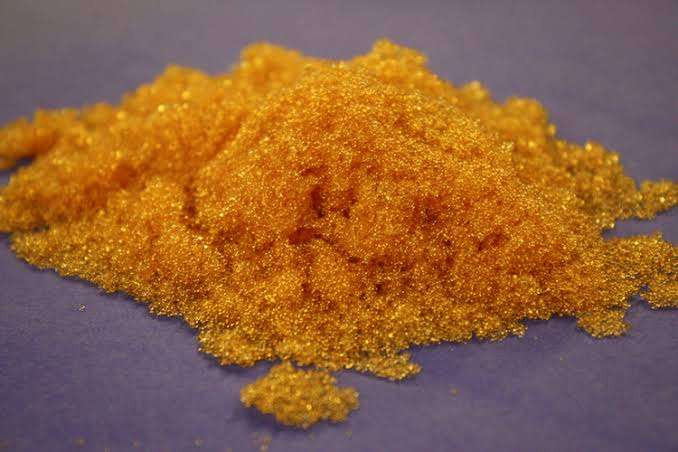
FG Water supplies DuPont AmberLite HPR550 Cl Ion Exchange Resin, a uniform particle size, gel, strong base anion exchange resin shipped in the chloride form. It is specified for condensate polishing beds in fossil power plants and for mixed bed demineralisation where the chloride form is preferred by the operator. Total exchange capacity is at least 1.35 eq/L in the chloride form, the average particle diameter is 550 +/- 50 micrometres with a uniformity coefficient of 1.1 or less, and the shipping weight is 690 g/L. This page sets out the published technical data, the pairing rules that govern mixed bed performance, the boundary between the chloride and hydroxide forms, and the information required to obtain an accurate, model-specific quotation.
Product Identity at a Glance
HPR550 Cl is the chloride-form member of the AmberLite 550 family and the historical equivalent of DOWEX MONOSPHERE 550A Ion Exchange Resin. When a specification names the legacy grade, this is the current commercial equivalent to quote against.
Attribute | Published value |
Product name | DuPont AmberLite HPR550 Cl Ion Exchange Resin |
Historical name | DOWEX MONOSPHERE 550A Ion Exchange Resin |
Resin type | Strong base anion |
Matrix | Gel |
Copolymer | Styrene-divinylbenzene |
Functional group | Trimethylammonium |
Ionic form as shipped | Chloride (Cl-) |
Physical form | White to yellow, translucent, spherical beads |
Total exchange capacity | 1.35 eq/L or greater (Cl- form) |
Water retention capacity | 42.0 to 49.0 percent (Cl- form) |
Particle diameter | 550 +/- 50 micrometres |
Uniformity coefficient | 1.1 or less |
Fines and oversize | 0.5 percent max below 300 micrometres; 1.0 percent max above 850 micrometres |
Particle density | 1.09 g/mL |
Shipping weight | 690 g/L |
Whole uncracked beads | 95 percent or greater |
Friability | Average 350 g/bead or greater; 95 percent of beads above 200 g/bead |
Swelling | Chloride to hydroxide form, 25 percent or less |
Temperature range (hydroxide form) | 5 to 100 degrees Celsius (41 to 212 degrees Fahrenheit) |
pH range (stable) | 0 to 14 |
Source | Product Data Sheet Form No. 45-D01192-en, Rev. 3, May 2026 |
Why Procurement Teams Specify the Chloride Form
The chloride form is not a default choice. It is selected when capacity per unit volume, bead survival at high flow, and visible layer separation matter more than the immediate availability of hydroxide sites.
Capacity per bed volume
At 1.35 eq/L or greater in the chloride form, HPR550 Cl carries a higher stated total exchange capacity than the hydroxide form of the same grade, which is published at 1.1 eq/L or greater. For an existing vessel with a fixed bed volume, that difference converts directly into ionic loading per regeneration cycle, which is why replacement specifications often name the chloride form even where the original fill was hydroxide.
Bead integrity at high service flow
Condensate polishing beds run at flow rates that penalise irregular media. The 550 micrometre mean diameter combined with a uniformity coefficient of 1.1 or less gives a narrow size distribution, so the bed expands evenly on backwash and does not channel. Whole uncracked beads are published at 95 percent or greater, with average friability of 350 g/bead or greater and at least 95 percent of beads surviving above 200 g/bead. That combination is what allows the media to hold up through repeated backwash and regeneration cycles at high flow.
Visual confirmation of layer separation
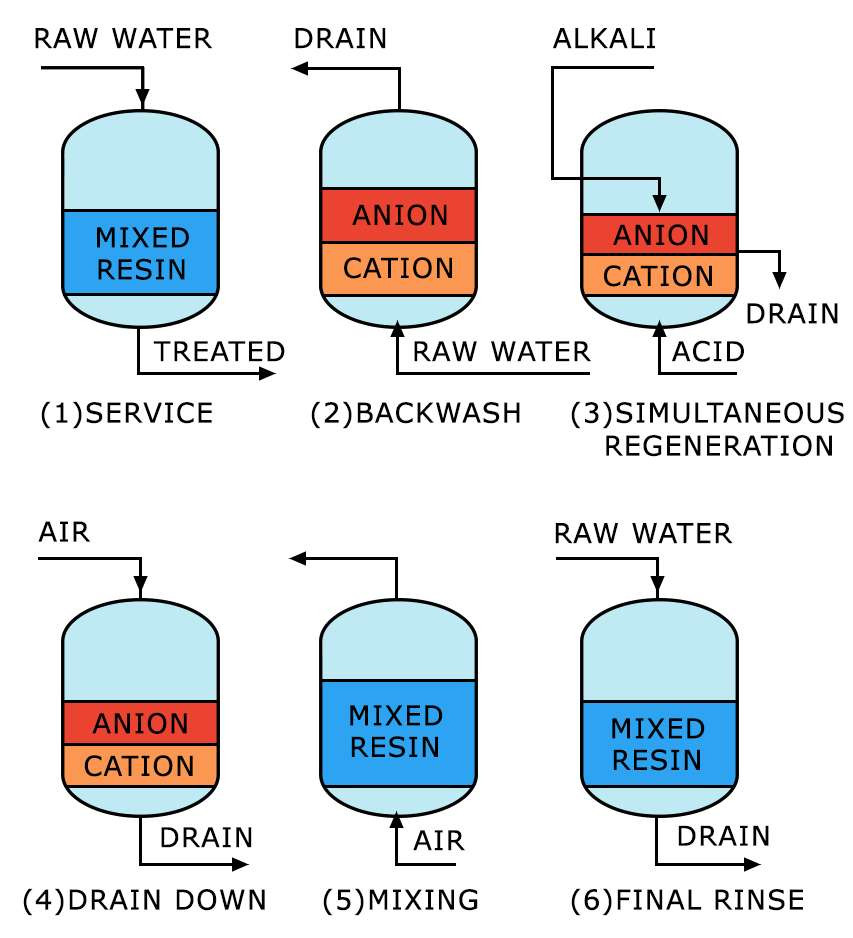
In a mixed bed, the run ends when the two media can no longer be kept apart. HPR550 Cl is supplied with a distinguishable light colour, and its bead size and density are tailored to complement the larger, denser, gel cation resin AmberLite HPR650 H. After backwash, the colour contrast between the two layers lets an operator confirm separation by sight, without sampling ports or conductivity profiling. For maintenance crews working to a fixed outage window, that visual check removes one source of uncertainty from the restart procedure.
Silica behaviour after reverse osmosis
Where a mixed bed polishes reverse osmosis permeate under a strict silica specification, or where silica removal capacity must be maximised, the chloride form is published as an alternative to the hydroxide form. The application statement also names high-silica feedwater and the goal of lowest silica leakage among the conditions the grade is designed for.
Mixed Bed Pairing and Layer Separation
An anion resin is only half of a mixed bed. The published pairing for HPR550 Cl is AmberLite HPR650 H, a gel strong acid cation resin, with AmberLite HPR1600 H listed as an additional gel option and AmberLite HPR2000 H, a macroporous grade, listed for external regeneration systems.
Bed layer | Published grade | Role | Published properties that drive the pairing |
Cation layer (lower) | AmberLite HPR650 H | Removes cations, provides the denser, larger bead fraction | Gel strong acid cation, 2.0 eq/L or greater, 650 +/- 50 micrometres, particle density 1.22 g/mL, shipping weight 785 g/L, 5 to 150 degrees Celsius |
Anion layer (upper) | AmberLite HPR550 Cl | Removes anions including silica, provides the lighter, lighter-coloured fraction | Gel strong base anion, 1.35 eq/L or greater, 550 +/- 50 micrometres, particle density 1.09 g/mL, shipping weight 690 g/L |
Alternative cation | AmberLite HPR1600 H | Gel cation option where specified | Listed by the manufacturer as an additional pairing option |
External regeneration duty | AmberLite HPR2000 H | Macroporous cation option for external regeneration systems | Listed by the manufacturer for external regeneration service |
The density gap between 1.22 g/mL and 1.09 g/mL, together with the difference in bead diameter, is what makes the two layers separate cleanly on backwash. Specifying both grades in the same purchase order keeps that gap inside the manufacturer's design intent; substituting one side of the pair with an unlisted grade transfers the separation risk to the operator.
HPR550 Cl or HPR550 OH: Selecting the Ionic Form
Both forms belong to the same 550 family and share the same gel, styrene-divinylbenzene matrix and trimethylammonium functional group. The decision is driven by capacity, water content and the ionic form the downstream system expects.
Decision factor | HPR550 Cl | HPR550 OH |
Ionic form as shipped | Chloride | Hydroxide |
Total exchange capacity | 1.35 eq/L or greater (Cl- form) | 1.1 eq/L or greater (OH- form) |
Water retention capacity | 42.0 to 49.0 percent | 55.0 to 65.0 percent |
Particle diameter | 550 +/- 50 micrometres | 590 +/- 50 micrometres |
Shipping weight | 690 g/L | 660 g/L |
Swelling on conversion | Chloride to hydroxide, 25 percent or less | Chloride to hydroxide, below 25 percent |
Published application emphasis | Condensate polishing and mixed bed demineralisation where the chloride form is preferred; post-RO polishing under a strict silica specification | High purity demineralisation and condensate polishing where the hydroxide form is preferred |
Practical consequence | Higher stated capacity per bed volume; requires conversion during commissioning to reach hydroxide duty | Ready in the hydroxide form at shipment; lower stated total capacity |
Where the plant's regeneration scheme converts the media to hydroxide on site, the chloride form is normally the specified grade. Where the bed must produce polished water with the shortest possible commissioning period, the hydroxide form removes one conversion step. Submit the regeneration scheme with the inquiry and the form can be confirmed before quotation.
Operating Limits and Handling Boundaries
Parameter | Published limit | Operating note |
Temperature range, hydroxide form | 5 to 100 degrees Celsius | Operating continuously above 60 to 70 degrees Celsius may affect loop purity and resin life; confirm the highest expected condensate temperature before specifying |
pH range, stable | 0 to 14 | The resin is chemically stable across the full pH range |
Swelling, chloride to hydroxide | 25 percent or less | Allow the published swelling margin in freeboard design |
Oxidising agents | Not tolerated | Oxidising agents such as nitric acid attack organic ion exchange resins and can cause anything from gradual degradation to a violent exothermic reaction; consult knowledgeable sources before any strong oxidant is introduced |
Hydraulic design | Bed expansion and pressure drop curves published at 10 to 60 degrees Celsius | Use the published curves for backwash and service hydraulic checks |
Bed depth, flow and regeneration conditions | Held in the manufacturer's Tech Facts for mixed beds (Form No. 45-D01127-en) and separate beds (Form No. 45-D01131-en) | Request the applicable Tech Fact before finalising the vessel data sheet |
Applications
Condensate polishing in fossil power plants
The grade is published for mixed bed condensate polishing in fossil power plants, where high flow rates, tight purity targets and short outage windows define the media specification. The narrow particle size distribution and the published friability figures address the flow and backwash duty; the colour contrast against the paired cation resin addresses the restart check.
Mixed bed polishing after reverse osmosis
For post-RO mixed bed polishing under a strict silica specification, or where silica removal capacity must be maximised, the chloride form is published as an alternative to the hydroxide form. Where the polishing bed sits behind a reverse osmosis train, the membrane and the resin should be specified together so that the silica load reaching the bed is known.
Single bed industrial demineralisation
The grade is also published for single bed industrial demineralisation where high water purity is required, and for the removal of strong and weak acids. This covers chemical, process and general industrial duty where a strong base anion bed sits downstream of a cation bed.
High-silica feedwater duty
Among the conditions the grade is designed for, the manufacturer names water with a high percentage of silica and a treatment goal of lowest silica leakage. Where silica carryover is the recurring complaint, the ionic form, the regeneration scheme and the upstream membrane condition should all be reviewed together rather than the media alone.
Supply, Packaging and Documentation
HPR550 Cl is supplied against the exact grade and ionic form named in the inquiry, so the media delivered matches the specification on the purchase order. Each package carries the manufacturer's lot identification, and the current product data sheet is provided with the shipment. The grade is listed in the international brand resin range alongside the paired cation grades, and the alternative supply programme covers equivalent Chinese-made strong base anion, strong acid cation, weak base anion, weak acid cation and mixed bed media where a substitution study is acceptable.
For mixed bed duties, the anion and cation resins can be quoted together on one delivery so that both sides of the pairing arrive on the same lot basis. Where a plant is replacing only one layer, the existing media type, the reason for replacement and the current bed depth should be stated so that the pairing can be checked before quotation.
What to Include in Your Inquiry
The exact grade and ionic form required, for example HPR550 Cl, and the legacy name if the specification is older, for example DOWEX MONOSPHERE 550A.
The required volume in litres or cubic metres, and whether the quantity is a single outage fill or a repeat supply agreement.
The number of vessels, bed volume per vessel and whether the bed is a mixed bed, a single bed or a layered bed.
The paired cation resin if the duty is a mixed bed, or the cation resin already in service if only one layer is being replaced.
The highest and normal condensate or feedwater temperature, since continuous operation above 60 to 70 degrees Celsius affects loop purity and resin life.
The feedwater or condensate analysis, particularly silica, conductivity and any oxidant residual.
The target product water quality, such as conductivity or silica leakage limits.
The destination port or delivery address, Incoterms and the required delivery window.
Any documentation required for import or plant acceptance, so it can be confirmed before shipment.
Frequently Asked Questions
What is HPR550 Cl ion exchange resin used for?
It is used for mixed bed condensate polishing in fossil power plants, mixed bed polishing in industrial demineralisation, and single bed industrial demineralisation where high water purity is required. The published application set also names high-silica feedwater and the treatment goal of lowest silica leakage, and names the chloride form as an alternative to the hydroxide form for post-RO mixed bed polishing under a strict silica specification.
What is the difference between HPR550 Cl and HPR550 OH?
Both are gel, styrene-divinylbenzene strong base anion resins with a trimethylammonium functional group. The chloride form is shipped as Cl- with a total exchange capacity of at least 1.35 eq/L, water retention of 42.0 to 49.0 percent, a mean diameter of 550 +/- 50 micrometres and a shipping weight of 690 g/L. The hydroxide form is shipped as OH- with a total exchange capacity of at least 1.1 eq/L, water retention of 55.0 to 65.0 percent, a mean diameter of 590 +/- 50 micrometres and a shipping weight of 660 g/L.
Can HPR550 Cl replace DOWEX MONOSPHERE 550A?
DOWEX MONOSPHERE 550A Ion Exchange Resin is the historical name under which this grade was previously sold. HPR550 Cl is the current commercial designation, so a legacy specification naming the older grade can be quoted against the current one.
Which cation resin should be paired with HPR550 Cl?
The published recommended pairing is AmberLite HPR650 H, a gel strong acid cation resin. AmberLite HPR1600 H is listed as an additional gel option, and the macroporous AmberLite HPR2000 H is listed for external regeneration systems. The pairing is designed so that the density and bead size difference produces a clean visual separation after backwash.
How do I confirm the bed has separated after backwash?
The two grades are supplied with a distinguishable colour difference: the anion resin is light, the paired cation resin is dark amber. After backwash the layers should read as two visually distinct bands. Confirm the separation visually before returning the bed to service, and record the backwash flow rate used so it can be repeated at the next outage.
What temperature can the resin tolerate?
The published temperature range for the hydroxide form is 5 to 100 degrees Celsius. The manufacturer notes that operation at elevated temperatures, for example above 60 to 70 degrees Celsius, may affect the purity of the loop and the resin life. In hot-climate installations, confirm the highest expected condensate temperature against that note before specifying.
How is the resin packaged and shipped?
The grade is supplied in the manufacturer's standard packaging with lot identification on each unit, and the current product data sheet accompanies the shipment. Confirm the packaging volume, pallet configuration and destination port with the inquiry so that freight can be quoted accurately.
How much media do I need for a mixed bed replacement?
Order volume follows the vessel's bed volume and the number of vessels, not the tonnage of the previous fill. Provide the vessel count, the bed depth and the designed bed expansion, and the quantity can be calculated against the published shipping weight of 690 g/L for this grade.
Is this grade suitable for nuclear condensate polishing?
The published applications for this grade cover mixed bed condensate polishing in fossil power plants and mixed bed polishing in industrial demineralisation. Where a nuclear duty is involved, submit the plant specification for review rather than relying on the published application list.
Request a Quotation
Send the grade, ionic form, volume, vessel data and the highest expected operating temperature, and you will receive a quotation against the exact model specified, together with the current product data sheet. For mixed bed duties, the paired cation resin can be included on the same delivery.
Email [email protected] or contact us on WhatsApp at +86-13646187144. Browse the full range at https://www.fgwater.com/International-Brand-Resins/ or review the complete resin portfolio at https://www.fgwater.com/Ion-Exchange-and-Adsorption-Resin/. Power plant and industrial duty references are available at https://www.fgwater.com/Power-Plant-Pure-Water/ and https://www.fgwater.com/Chemical-Industry-Water/.
Send Your Water Treatment Requirement
Tell us the feedwater, required capacity, target water quality and project conditions. Your inquiry email will automatically include the page you are viewing so our team can understand the exact product, technology or reference that led to your request.
- Feedwater source / available analysis
- Design flow or required production capacity
- Target product-water quality or process duty
- Project country, operating conditions and delivery target